Understanding Heterotopic Ossification (H.O.)
Heterotopic ossification (H.O.) is a benign condition in which bone forms abnormally in soft tissues such as muscles, tendons, or ligaments—often near joints. This abnormal bone growth can lead to pain, stiffness, reduced range of motion, and functional limitations.
H.O. most commonly develops after trauma, orthopedic surgery (such as hip or knee replacement), spinal cord injury, or neurological injury. While not cancerous, heterotopic ossification can significantly impact mobility and quality of life if left untreated.
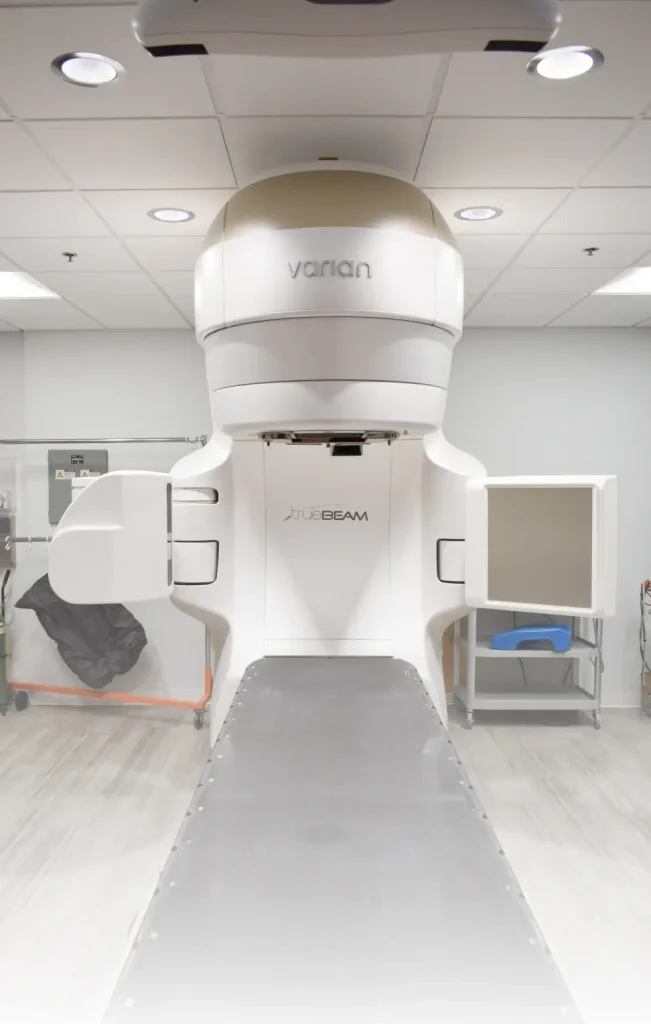
At Radiant Cancer Care, radiation therapy may be considered in select cases of heterotopic ossification, most commonly as a preventive treatment following surgery or injury when the risk of abnormal bone formation is high.
Common Symptoms of Heterotopic Ossification
Symptoms of H.O. vary depending on location and severity and may include:
- Pain or tenderness near a joint
- Swelling or warmth in the affected area
- Progressive stiffness or reduced range of motion
- Difficulty walking or performing daily activities
- Palpable hard mass near soft tissue
- Functional limitations following surgery or injury
Early recognition is important, as preventive treatment is most effective before significant bone formation occurs.
Diagnosis: What to Expect
Diagnosing heterotopic ossification typically involves:
- Medical history & physical exam: Review of recent surgery, trauma, or neurological injury
- Imaging tests: X-rays, CT scans, or bone scans to detect abnormal bone formation
- Orthopedic consultation: Evaluation of joint function and mobility
- Risk assessment: Identification of patients at higher risk for recurrence
Radiation therapy is usually considered before or shortly after surgery, or early in the disease process.